YouTube · End-to-End Ownership · 2026
Accelerating AI Content Discovery
An AI-powered platform that helps YouTube's Social team discover, vet, and activate trending creators and videos, reducing a multi-hour manual workflow to minutes.
- Role
- Lead UX Designer
- Team
- Product Manager 1 Front End 2 Back End
- Timeline
- 3 months
- Platform
- Internal web tool
- Tools
- Figma Gemini VS Code
Introduction
YouTube's Social team of 30+ marketers manually searched TikTok, Instagram, and YouTube every day to discover trending creators and videos for brand engagement.
Discovery, vetting, approvals, and campaign drafting were spread across disconnected tools, creating a slow, manual workflow where valuable content was difficult to find and trends were often missed.
The impact

One of our proudest results. This comment was generated with the help of the system and received 129K+ likes and 900+ replies.
Presented to YouTube’s CMO and 500+ marketers.
The designs looked so great and easy to use. I’m super impressed:
every question I had, you’d already answered it.
The Discovery Hub
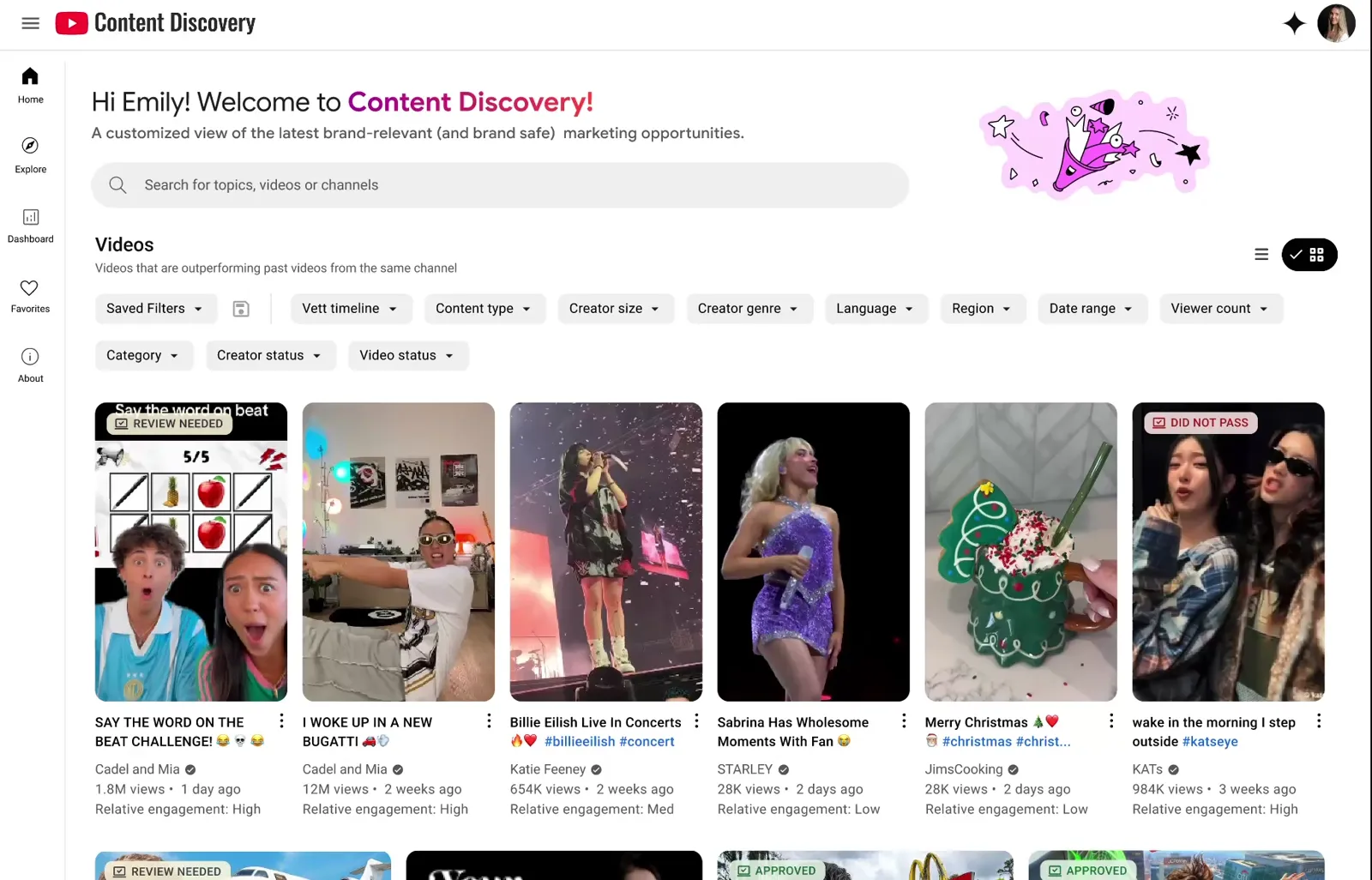
A centralized internal platform replacing the full manual workflow, from content surfacing to team approval, in a single shared tool.
MVP scope
- Discovery feed
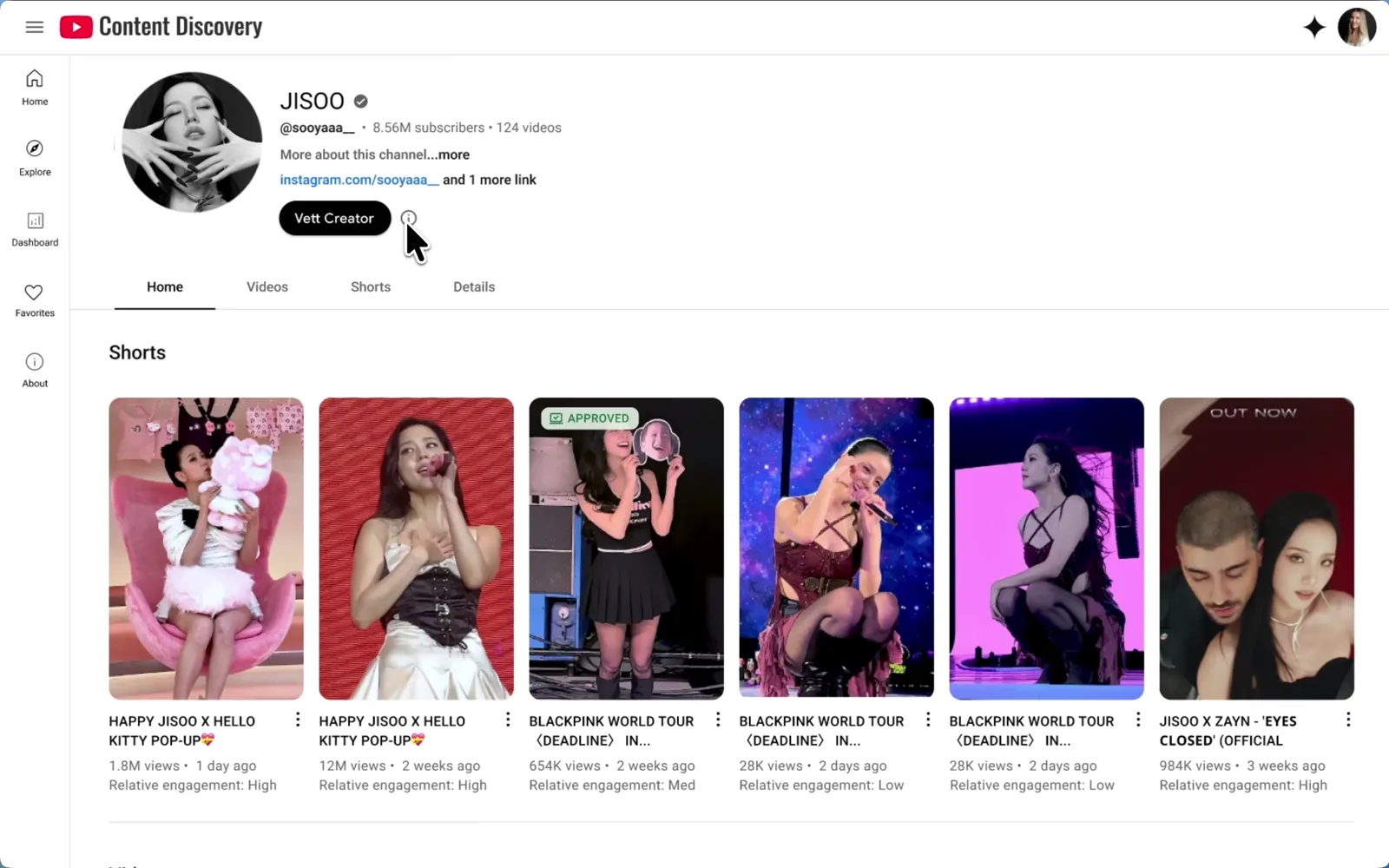
- Creator vetting
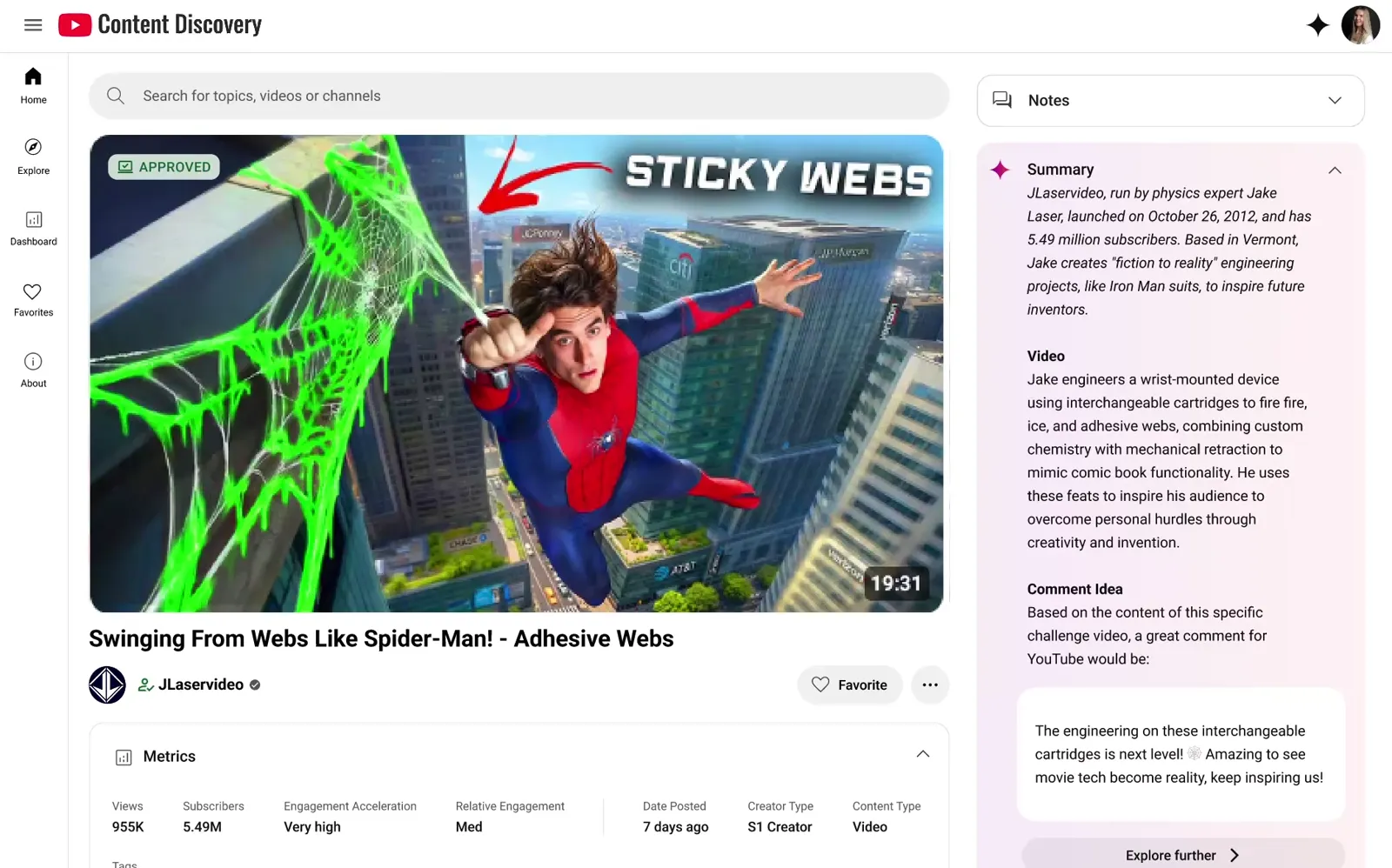
- AI summaries
- Comment drafts
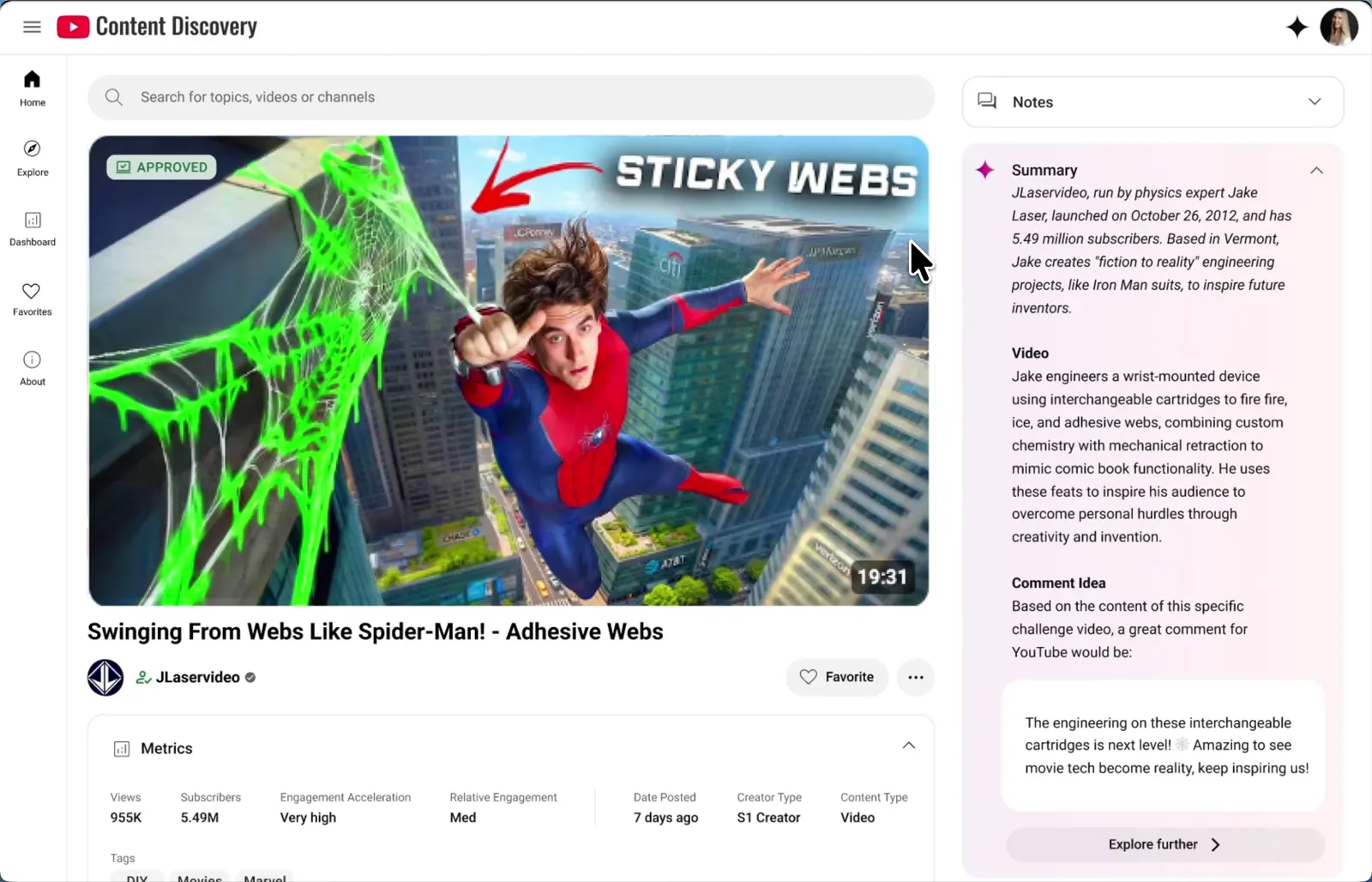
- Shared notes
Discovery feed
A customized, brand-safe feed of trending content surfaced automatically, with no more manual scrolling across 3 platforms.
Creator vetting
Replaces manual creator vetting with automated AI-powered brand safety evaluation, enabling faster and more confident decision-making.
AI summaries
Open any video for an at-a-glance AI summary of its topic, surfaced in both the video detail and feed to let reviewers decide in seconds.
Comment drafts
AI-generated, brand-safe comment suggestions ready to edit and post, so the team responds in the moment, not days later.
Shared notes
Inline team notes pinned to each video, visible to all 30+ teammates so context never gets lost.
Measuring success
A side-by-side look at the workflow before and the UX impact after launch.
Before
Manual "Doom-scrolling"
Slow, inefficient discovery across multiple platforms.
High Noise, low relevance
Niche content is buried in global data.
Missed Windows
Manual vetting delayed timely engagement.
After
Automate discovery
Saves hours with a centralized feed.
Improve relevance
Surfaces brand-safe content instantly.
Enable speed
Captures trend peaks within tight windows.
My role
I led end‑to‑end product design from discovery to delivery, including:
- UX Research: Identified workflow inefficiencies and user needs.
- Product Strategy: Defined opportunities and prioritized solutions.
- Product Design: Designed end-to-end workflows and user experiences.
- Collaboration: Partnered across product and engineering teams.
The problem
With trending content having a 48-hour lifespan, the team was consistently missing the window to act. Over 30 people performed the same manual task daily across disconnected workflows, with less than 25% of surfaced content actually being on-brand.
30+
team members performing same manual task daily
48 hrs
window before trending content expires
<25%
of surfaced content was actually on-brand
Understanding the workflow
Through discovery sessions with Emily, a key member of the YouTube Social Marketing Team, I mapped her end-to-end workflow and identified three key pain points:
Manual "Doom-scrolling"
Slow, inefficient discovery across multiple platforms.
High Noise, low relevance
Niche content is buried in global data.
Missed Windows
Manual vetting delayed timely engagement.
This isn't a UX problem, it's a risk to business capital. 30 people spending creative hours on data entry is a structural cost.
A tool already existed, and failed
A team had vibe-coded an internal tool for this problem. Built for a process, not a person, it hit 0% adoption and landed 70% below target. My research findings informed the decision to start from scratch.

Designing with Google's AI patterns
I researched how Google and YouTube integrate AI across their products and used what I found as inspiration to inform my design decisions for this team.

Three principles to guide the solution
Rather than iterate on the failed tool, I reframed the problem around how discovery actually happens and what the team needed to move faster:
Automate discovery
Saves hours with a centralized feed.
Improve relevance
Surfaces brand-safe content instantly.
Enable speed
Captures trend peaks within tight windows.
Reflection
Leading this concept end to end reinforced that great product experiences are not just about making existing workflows better, but about uncovering new opportunities for user value.
By reimagining how viewers discover content, I explored how design can influence behavior, strengthen creator visibility, and support business goals.
The experience deepened my product thinking and reinforced my passion for continuous learning and solving complex challenges.