YouTube · 0→1 AI Product Design · 2026
Turning Data into AI Reports
An AI-powered, centralized research platform that automates YouTube's Culture & Trends report generation from hours to a single click.
- Role
- Lead Product Designer
- Team
- Product Manager 1 Front End 2 Back End
- Timeline
- 6 months
- Platform
- Internal web tool
- Tools
- Figma Gemini Antigravity
Introduction
YouTube's Culture and Trends team relied on fragmented tools, manual data tracking, and external agencies to build market reports.
To eliminate this friction, I designed an in-house, centralized platform heavily inspired by the seamless experience of Gemini Deep Research.
The tool automates the entire research pipeline, turning raw video data into human-centric, ready-to-use reports through a simple, single-click interface.
The impact
$500K+
Annual Cost Savings
20 hrs24 mins
Report Creation
Core MVP Features
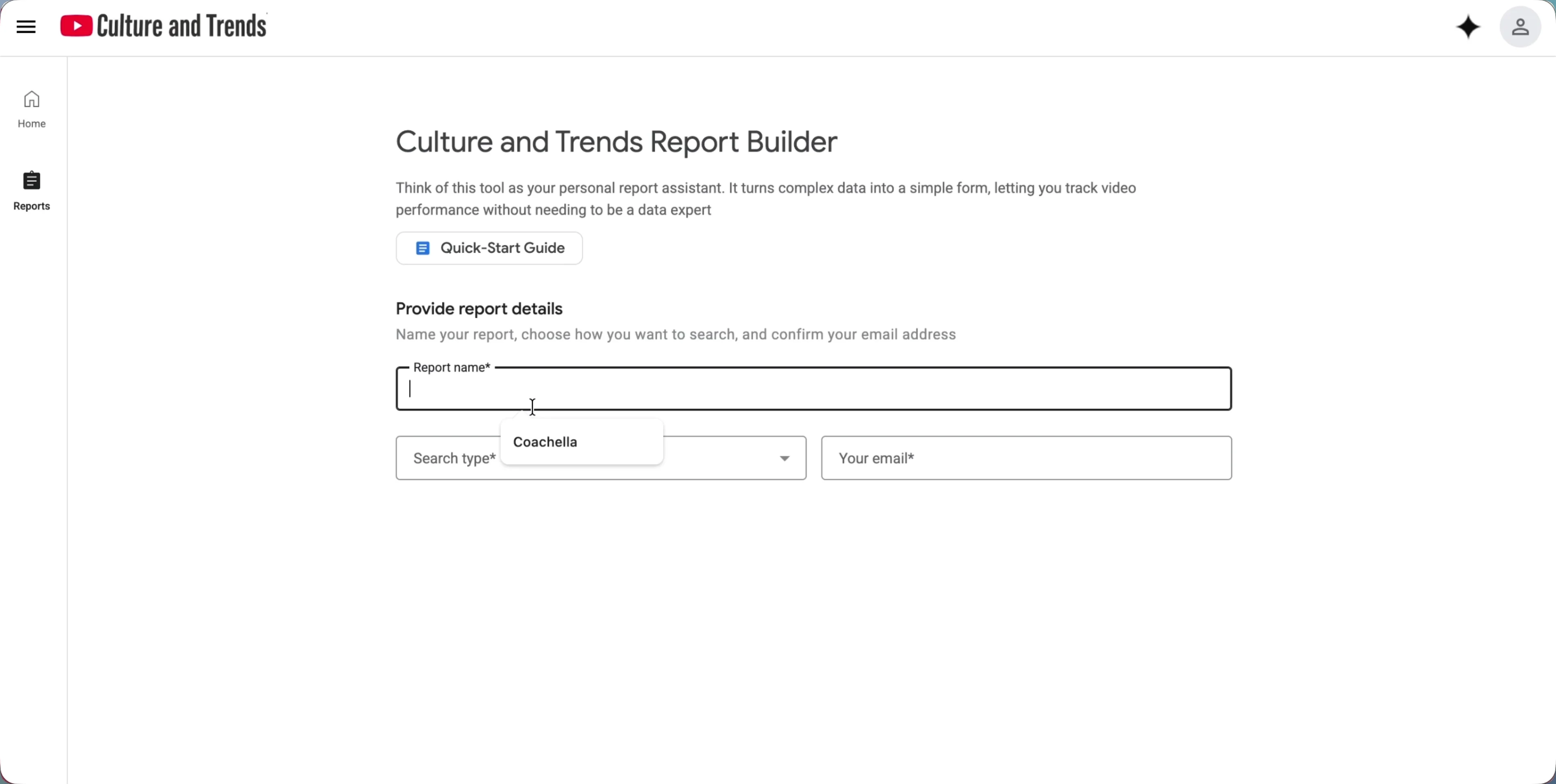
Jargon-Free Guided Form
Replaced the over-engineered layout with a simplified, user-friendly guided experience.
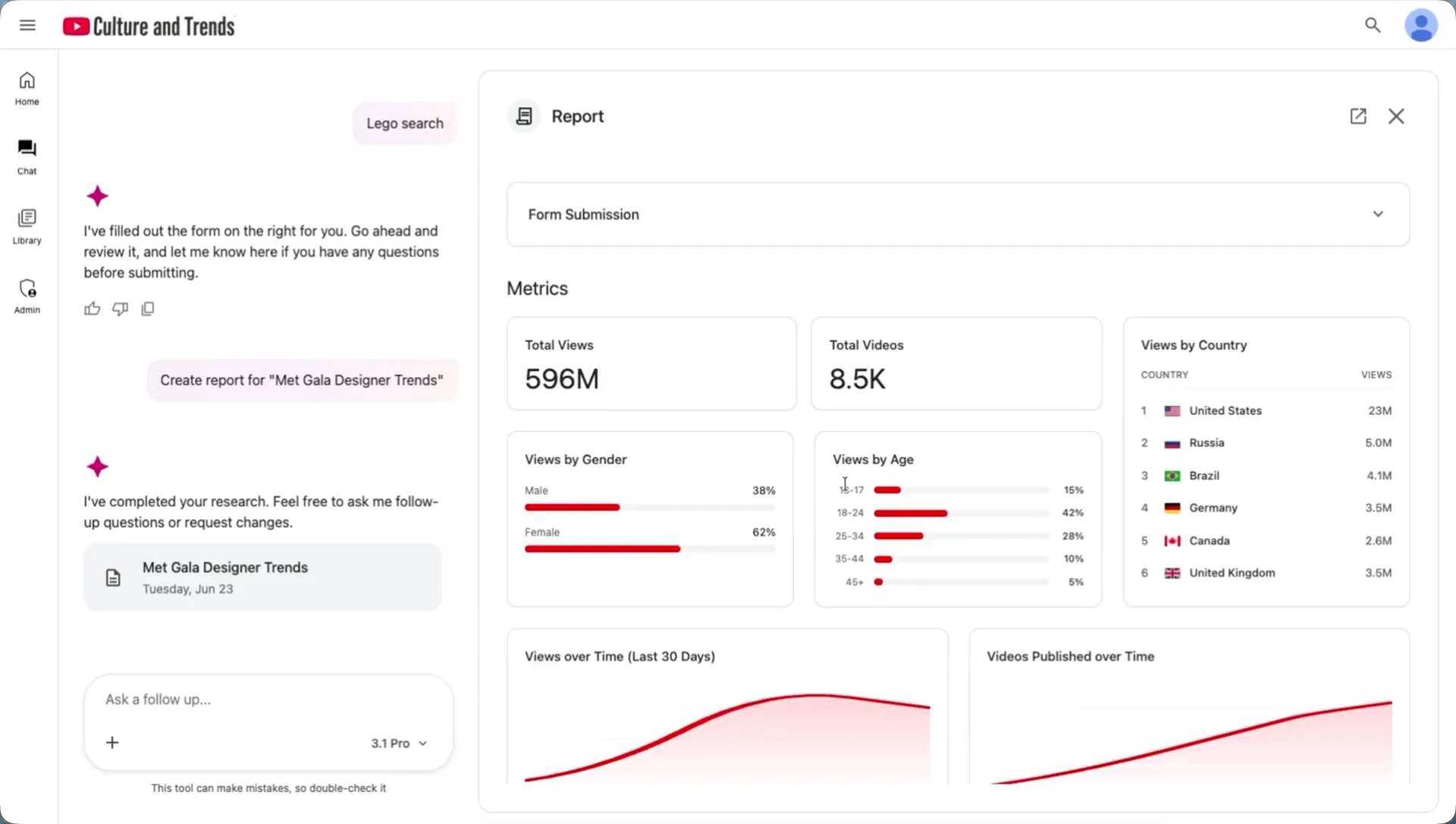
Sectioned Digital Report
Transformed the exhausting wall of words into a clean, scannable digital report that breaks down each section.
Vibe-Coded Future Concepts
Designed in Figma using proven interaction patterns informed by AI products like Gemini and Google Docs.
Built future concepts in Antigravity using vanilla web development to explore interactions beyond the MVP and accelerate engineering handoff.
Gemini-Style Deep Research
Redesign the core engine to automatically run deep analysis and load the report natively directly within the tool.
In-Tool Data Verification
Allow users to instantly check and validate source data directly within the platform interface.
Multi-Template Library
Expand capabilities by introducing a variety of report types and customizable templates directly in the tool.
My role
I led end-to-end strategy, design, research, and prototyping for the new platform:
- Research: Used Gemini Deep Research to explore AI workflows and inspire concepts.
- Strategy: Defined AI opportunities and prioritized solutions.
- Design: Designed end-to-end workflows and user experiences.
- Vibe Coding: Rapidly prototyped concepts using AI-assisted development.
Problems
To reduce reliance on external research agencies, YouTube's Culture & Trends team set out to build an in-house research platform. However, the initial prototype introduced new challenges that made it difficult for teams to adopt and use effectively.
Technical Jargon
Complex AI terminology created a steep learning curve.
Fragmented Workflow
Teams relied on disconnected tools and manual processes.
Poor Usability
High friction made trend analysis slow and inefficient.
Over-engineered and fragmented
The form was overcomplicated with tech jargon, forcing users to manually adjust messy settings and broken date filters just to start a search.
Exhausting Wall of Words
The report is messy, text-heavy, and poorly organized. Its crowded layout makes it exhausting for users to scan and find key insights.
Solutions
Simplified Language
Replaced technical terminology with clear, approachable language.
Unified Experience
Consolidated research activities into a single workflow.
Streamlined UX
Reduced friction with a more intuitive experience.
Reflection
This project expanded how I think about product design beyond Figma. Using AI-assisted development tools like Antigravity helped me quickly prototype interactive concepts, communicate functionality more effectively, and better understand frontend implementation.
While these prototypes were created to explore future iterations rather than the current MVP, they showed me how AI can accelerate product discovery and strengthen collaboration between design and engineering.


